The Death of the 10% Wear & Tear Allowance: Why Your Tax Bill Might Go Up (2026)
Daniel Broadhurst (Founder)
Feb 1, 2026 • 6 min read
Key Takeaways
The Death of the 10% Wear & Tear Allowance: Why Your Tax Bill Might Go Up
For many years, the 10% Wear and Tear Allowance was a reliable companion for childminders. It was an easy, agreed rule with HMRC—specifically mentioned in their manual under BIM52751—that let you deduct a flat 10% of your income to cover the replacement of furniture, carpets, and appliances. You didn't need to keep a single receipt for it. It was simple, and for many of us, it was a vital way to keep our taxable profit in check without the headache of constant bookkeeping.
[!TIP] This article is part of our Ultimate 2026 MTD Roadmap for Childminders. We recommend reading the full guide to understand the broader changes to your quarterly deadlines.
That era is coming to a close. As the UK prepares for the full rollout of Making Tax Digital (MTD) for Income Tax in 2026, HMRC is moving away from estimates and toward evidence. If you are one of the many childminders who still relies on that old 10% figure, you may be in for a shock when you come to file your next return. Failing to adapt to these new rules doesn't just mean a higher tax bill; it could also flag your setting for a compliance check.
Moving from Estimates to Evidence
HMRC's new approach is built on "Cash Basis" accounting. The principle is straightforward: you can only claim a tax deduction for money you have actually spent. In the past, if your turnover was £20,000, you could simply claim £2,000 for wear and tear, even if you hadn't bought a new cushion all year. Now, you must claim for the actual cost of the items you replace.
This shift brings us back to the core HMRC rule of expenses being "wholly and exclusively" for business. However, as childminders, our homes are our workplaces. Your sofa is where your mindees sit for story time, but it’s also where your family watches TV on a Saturday night. This means you cannot claim the full cost of a new item; instead, you must apportion it.
The Challenge of Apportioning Costs
When you buy a piece of equipment that is used for both work and home life, you have to calculate a fair percentage for the business use. If you buy a new washing machine for £500 and you find that you run ten loads a week—six for the business (washing bibs, bedding, and messy play clothes) and four for your family—you can claim 60% of that cost, which is £300.
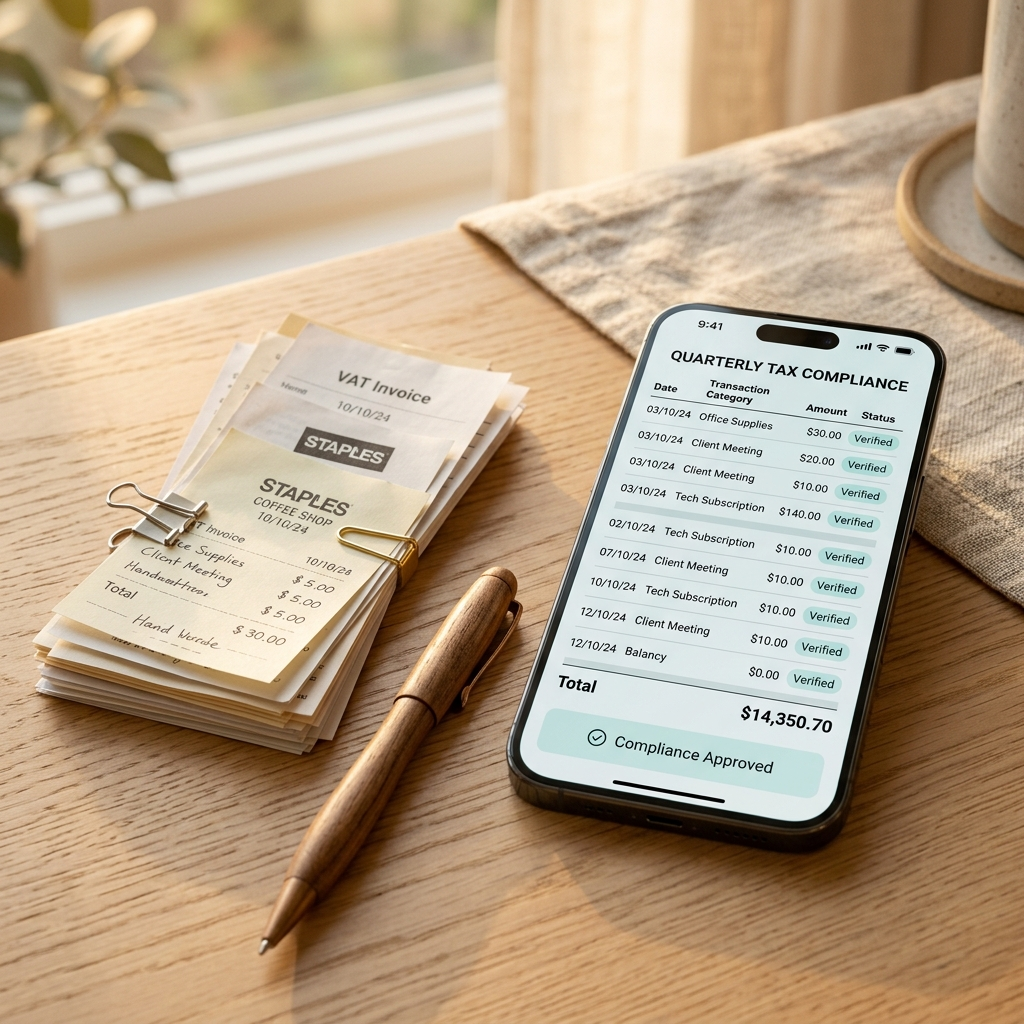
While this system is technically fairer, it creates a significant administrative burden. To successfully claim that £300, you need two things that many of us struggle to maintain: the original receipt and a clear record of your calculation. In the digital age, a fading thermal receipt in a shoebox is no longer enough. You need a permanent, digital record that can be stored for the six years HMRC requires.
Preparing for April 2026
The transition to MTD for Income Tax is mandated for sole traders with a qualifying income over £50,000 from April 2026, and for those over £30,000 from April 2027. This means quarterly updates rather than just one annual scramble. If you lose a receipt now, you are losing money. If you guess your percentages, you risk a penalty for inaccuracy.
The loss of the 10% allowance isn't necessarily a bad thing for your finances, but it is a challenge to your organisation. Many childminders find that when they actually track their expenses, they are spending far more than the old allowance covered. The key to ensuring your tax bill doesn't rise is to capture every single expense, no matter how small.
By moving away from paper and embracing a system designed for the specific needs of childminders, you can turn this regulatory change into an advantage. You can ensure that every rug, toy, and appliance is working for you at tax time, without the fear of an audit hanging over your head. It’s time to ditch the shoebox and start building an evidence-based business that is ready for 2026 and beyond.