Winter Activity Ideas to Enhance Self-Regulation in Young Children
Daniel Broadhurst (Founder)
Dec 3, 2025 • 5 min read
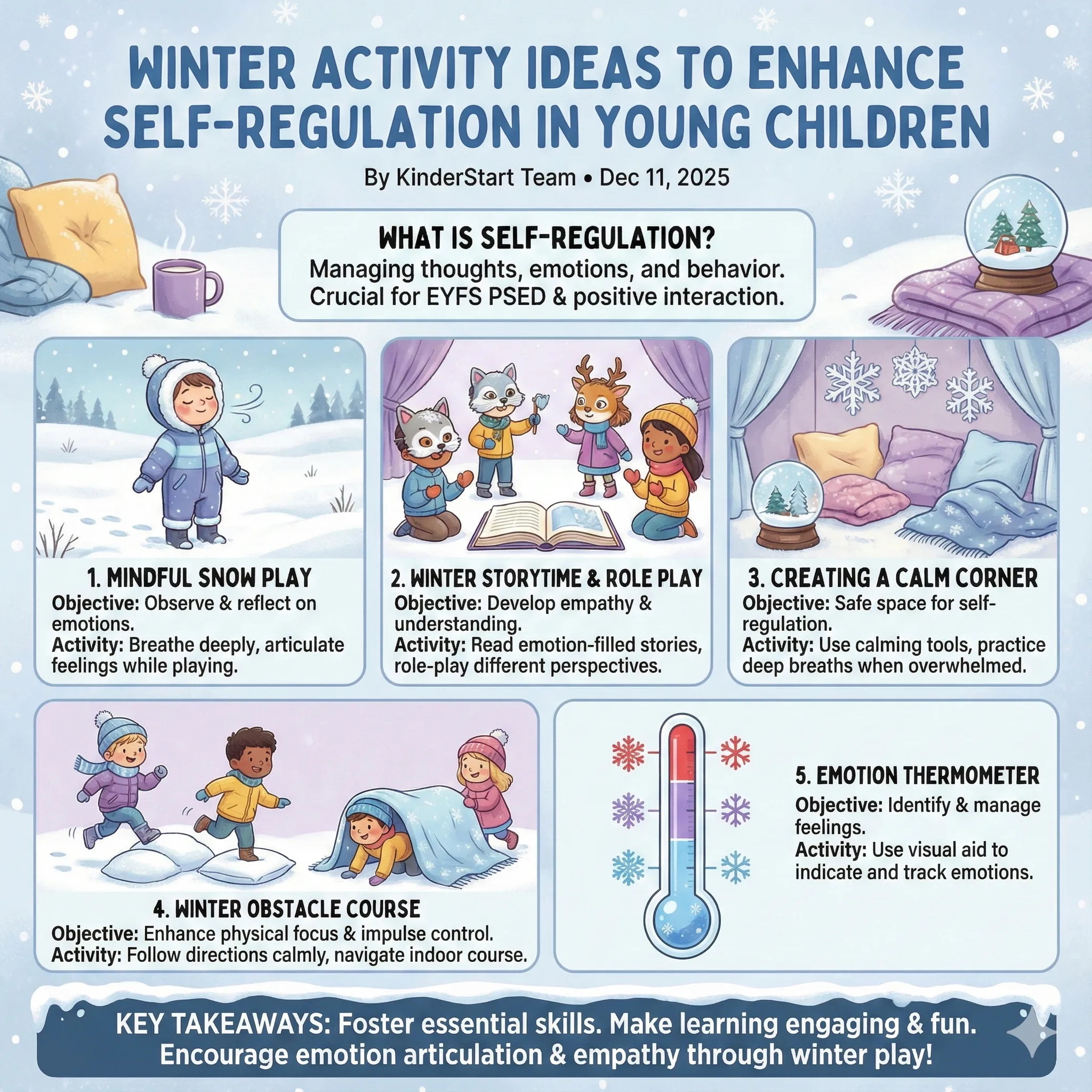
Key Takeaways
Introduction
As the winter season envelops the UK in its chilly embrace, it's the perfect time to focus on fostering self-regulation skills in young children. Self-regulation, a crucial aspect of Personal, Social, and Emotional Development (PSED) as outlined in the Early Years Foundation Stage (EYFS), empowers children to manage their emotions, behaviour, and interactions with others. In this blog post, we’ll explore engaging winter activity ideas that can help enhance these essential skills in a fun and interactive way.
Understanding Self-Regulation
Self-regulation involves the ability to control one's thoughts, emotions, and behaviours in various situations. It is foundational for children as they learn to navigate their environment and interact with peers. Through play and structured activities, children can practice these skills in a supportive setting, allowing them to grow and develop positively.
Winter Activity Ideas to Promote Self-Regulation
Here are some engaging winter-themed activities designed to encourage self-regulation in young children:
1. Mindful Snow Play
Objective: Encourage children to observe and reflect on their emotions.
Activity: Take children outside to play in the snow. Before they start, teach them a simple breathing exercise to calm their minds. As they play, ask them to describe how the cold feels, how they feel while playing, and encourage them to articulate their emotions. This helps them connect feelings with words, enhancing emotional vocabulary and self-awareness.
2. Winter Storytime and Role Play
Objective: Develop empathy and emotional understanding.
Activity: Read a winter-themed story that involves characters experiencing various emotions (like excitement during snow play or sadness when losing a snowball fight). After the story, engage the children in role play where they can act out parts of the story. This helps them understand different perspectives and manage emotions.
3. Creating a Calm Corner
Objective: Provide a safe space for self-regulation.
Activity: Set up a 'Calm Corner' in your childcare setting with winter-themed calming tools, like soft blankets, snowflakes cut from paper, and sensory items like snow dough. Encourage children to use this space when they feel overwhelmed. Teach them how to take deep breaths or squeeze a stress ball to regain control.
4. Winter Obstacle Course
Objective: Enhance physical self-regulation and focus.
Activity: Create an indoor obstacle course using soft play equipment or cushions that mimic a winter landscape (like hopping over ‘snow mounds’). Encourage children to follow directions calmly and focus on completing each section of the course, promoting impulse control and physical coordination.
5. Emotion Thermometer
Objective: Help children identify and manage their feelings.
Activity: Create a large emotion thermometer on a poster board and have children use winter-themed colours to represent different emotions. As they engage in activities, prompt them to reflect on their feelings and place a marker on the thermometer to indicate how they feel. This visual representation aids in recognising and regulating their emotions.
Key Takeaways
- Fostering self-regulation skills in young children is essential for their overall development.
- Incorporating winter-themed activities can make learning these skills more engaging and fun.
- Encourage children to articulate their emotions, practice empathy, and develop coping strategies through play.
By integrating these winter activities into your childminding practice, you're not only helping children enjoy the season but also laying the groundwork for their emotional intelligence and social skills. Let's embrace winter as a time for growth and learning!