Chinese New Year Activities for Early Years
KinderStart Team
2026-11-23 • 8 min read
Key Takeaways
 Key Takeaways
In 2027, Lunar New Year falls on Saturday 6 February. It begins the Year of the Goat. The date changes every year. The festival starts on the first day of the first lunar month. For many people across Asia it is the biggest festival of the year (Royal Museums Greenwich: Lunar New Year dates). In the UK you'll often hear it called Chinese New Year. Families from many backgrounds mark it in their own ways.
This guide gives you activities for babies, toddlers and pre-schoolers, each linked to your curriculum. There are also notes on how to celebrate with respect and stay safe.
Celebrate it with families, not about them
If a family in your setting celebrates Lunar New Year, ask them first. They may want to share a story, a greeting, a photo or a dish. Or they may prefer not to. Their way is the right way for your setting.
- Show it as a real, living festival that families enjoy today, not as a costume or a theme.
- Avoid jokes, put-on accents and "dressing up as" someone from another country.
- Choose picture books and pictures that show real families taking part today.
- Don't assume every family with roots in East or South East Asia marks it, or marks it the same way.
For more ideas, see the list of Chinese New Year teaching resources from the University of Strathclyde's Confucius Institute for Scotland's Schools. It includes videos on dumplings, red envelopes, a rattle drum and the Great Race.
How the links work in each nation
You'll see three short lines under each activity. Use the one for your nation.
- England: the seven areas of learning in the EYFS statutory framework for childminders. Your inspectorate is Ofsted.
- Scotland: Realising the Ambition: Being Me and the SHANARRI wellbeing indicators. For most children, the early level of Curriculum for Excellence runs from age three to the end of Primary 1. So we name a curriculum area for pre-schoolers. Your inspectorate is the Care Inspectorate.
- Wales: the five developmental pathways in the curriculum for funded non-maintained nursery settings. These are belonging, communication, exploration, physical development and well-being. You'll also see the six Areas of Learning and Experience of Curriculum for Wales. Your inspectorate is Care Inspectorate Wales (CIW).
These are starting points, not tick boxes. What a child actually does tells you which area fits best.
Lunar New Year activities for babies
Babies love colour, sound and faces. Keep it simple and repeat what they love.
1. Red and gold treasure basket
Fill a basket with safe red and gold things: a red scarf, a gold foil tray, a red cup, a sealed shaker bottle with red water. Name the colours as they play.
- England: Physical Development; Communication and Language
- Scotland: Realising the Ambition (when I am a baby); SHANARRI: Nurtured, Safe
- Wales: Pathways: exploration, communication
2. Drum and cymbal sounds
People do lion dances to drums and cymbals. Tap a pan with a wooden spoon, loud then quiet, fast then slow. Give babies a sealed shaker or a spoon to bang along.
- England: Expressive Arts and Design; Communication and Language
- Scotland: Realising the Ambition (when I am a baby); SHANARRI: Active, Included
- Wales: Pathways: communication, well-being
3. Lantern watching
Hang a paper lantern or a red paper shape near a window or in a gentle draught. Put it where babies can see it but not reach it. Lie them under it during floor time and talk about the colour and how it moves.
- England: Understanding the World; Communication and Language
- Scotland: Realising the Ambition (when I am a baby); SHANARRI: Nurtured
- Wales: Pathways: exploration, well-being
Lunar New Year activities for toddlers
Toddlers want to move and make noise. Give them big actions and plenty of repeats.
4. Box lion dance
Make a lion head from a cardboard box and a long piece of cloth for the body. One child holds the head, others hold the fabric behind, and everyone moves to your drumbeat. Take turns at the front.
- England: Physical Development; Expressive Arts and Design
- Scotland: Realising the Ambition (when I am a toddler); SHANARRI: Active, Included
- Wales: Pathways: physical development, belonging
5. Noodle play
Put cooked, cooled noodles in a tray with tongs, spoons and bowls. Let them pick up, drop, fill and pour. Talk about long, short, slippery and wiggly.
- England: Physical Development; Communication and Language
- Scotland: Realising the Ambition (when I am a toddler); SHANARRI: Achieving
- Wales: Pathways: exploration, physical development
6. Great Race animal parade
The 12 animals of the zodiac come from a story about a great race across a river. Lay a blue blanket on the floor as the river and help toy animals cross it. Who's first? Who's next? Who's last?
- England: Mathematics; Communication and Language
- Scotland: Realising the Ambition (when I am a toddler); SHANARRI: Achieving
- Wales: Pathways: communication, exploration
Lunar New Year activities for pre-schoolers
Three and four year olds can follow a story, put things in order and make things for other people.
7. Tell and order the Great Race
Tell the story of the Great Race with toy or picture animals. Then line them up 1st to 12th and talk about the order. Ask: which animal is 2027? (The goat.) Which animal is next to it?
- England: Mathematics; Communication and Language
- Scotland: Curriculum for Excellence early level: Numeracy and mathematics; SHANARRI: Achieving
- Wales: Mathematics and Numeracy; pathway: communication
8. Paper lanterns
Fold a sheet of red paper in half. Cut slits from the fold for them, or help them snip. Open it out and tape it into a tube. Add a paper handle. Hang them up together.
- England: Expressive Arts and Design; Physical Development
- Scotland: Curriculum for Excellence early level: Expressive arts; SHANARRI: Achieving
- Wales: Expressive Arts; pathway: physical development
9. Red envelope kind wishes
Red envelopes are a big part of the New Year for many families. Make red paper envelopes together. Put a drawing or a kind wish inside for someone at home.
- England: Personal, Social and Emotional Development; Literacy
- Scotland: Curriculum for Excellence early level: Literacy and English; SHANARRI: Respected, Included
- Wales: Languages, Literacy and Communication; pathway: belonging
10. Clean the home corner
Many families clean their home before the New Year to make a fresh start. Give everyone a cloth and a job in the play kitchen or home corner. Talk about why a fresh start feels good.
- England: Understanding the World; Personal, Social and Emotional Development
- Scotland: Curriculum for Excellence early level: Social studies; SHANARRI: Responsible
- Wales: Humanities; pathway: belonging
11. Make and taste dumplings
Make pretend dumplings with playdough first: roll, flatten, fill and pinch. If a family is happy to share a recipe, you could then taste real ones, cooked by an adult.
- England: Physical Development; Understanding the World
- Scotland: Curriculum for Excellence early level: Health and wellbeing; SHANARRI: Healthy
- Wales: Health and Well-being; pathway: physical development
Lunar New Year safety
No real flames. Use paper lanterns only. RoSPA says don't let children carry, play with, reach over or be near lit candles. Never leave a burning candle unattended. (RoSPA: burns and scalds) If you use a light-up lantern, check its battery cover is screwed shut. CAPT warns that button batteries in easy-to-open novelties can kill a child if swallowed. (CAPT: button battery risks)
Allergens. New Year dishes can include soya, sesame, wheat, eggs, peanuts, fish or shellfish. These are all among the 14 allergens that food law names. Ask what's in anything a family brings in. Check each child's records before anyone tastes it.
Choking. Cut noodles short for under-3s and keep everyone sitting down to eat. Some families hide a coin in a dumpling for luck. Never do this with young children. The NHS says keep small objects out of reach and think about size, shape and texture when you prepare food. (NHS: how to stop a child from choking)
Note
We don't have a Lunar New Year printable yet. The activities above use things you already have at home.
Observing without the paperwork
You don't need a photo of every child doing every activity. Watch for the new thing: a first word, a first go at something, a child who usually hangs back joining in. Write what they did and said, not "enjoyed the activity", and note one next step.
If you use KinderStart, you can record an observation on your phone in a few taps. Tag it to EYFS, Curriculum for Excellence or Curriculum for Wales, and share it with parents straight away.
More seasonal activities
- Burns Night activities (25 January)
- Pancake Day activities (Shrove Tuesday)
- World Book Day activities (March)
- Christmas activities (December)
Key takeaways
- Lunar New Year 2027 is on Saturday 6 February, the start of the Year of the Goat.
- Ask families who celebrate how they'd like to join in. Present it as a living festival, not a costume theme.
- Drums, lanterns, the Great Race, red envelopes and dumplings give you activities for every age.
- Use paper lanterns, never real flames, and check every food for the 14 allergens.
Try Our Free Tools
 Try Our Free Tools
Continue Reading in this Series
Printables for your setting
All printables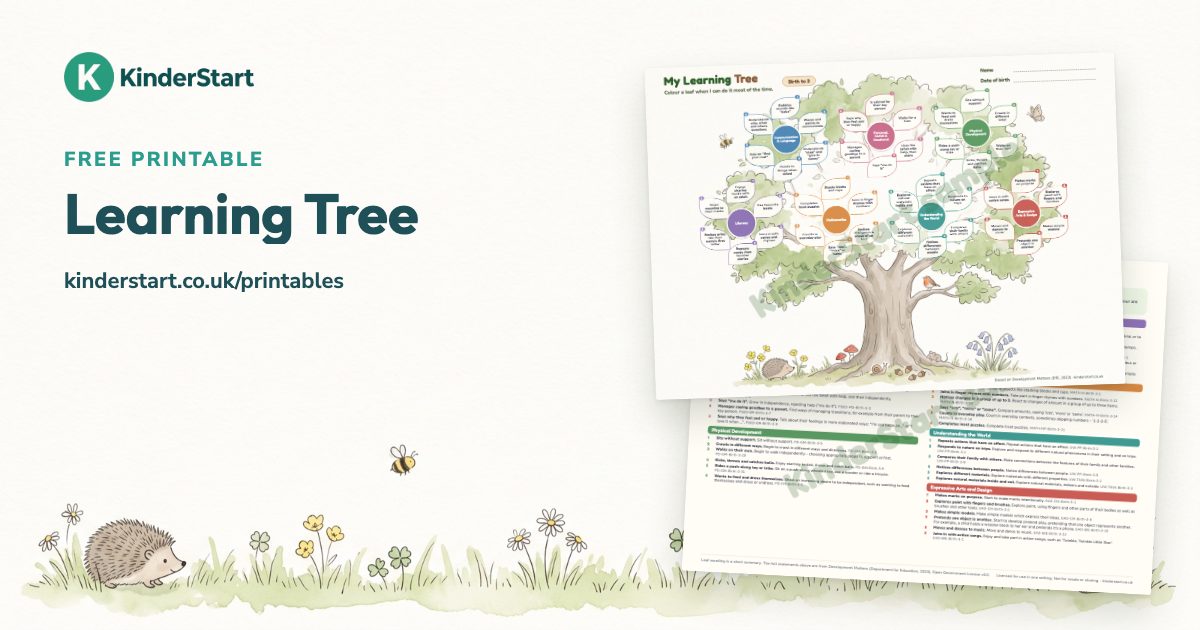
Learning Tree (Birth to 3)
FreeTracker · Birth to 3
England, Scotland, Wales
A painted Learning Tree for babies and toddlers. It covers first words, moving and exploring, and secure relationships. Colour a leaf as each one comes.
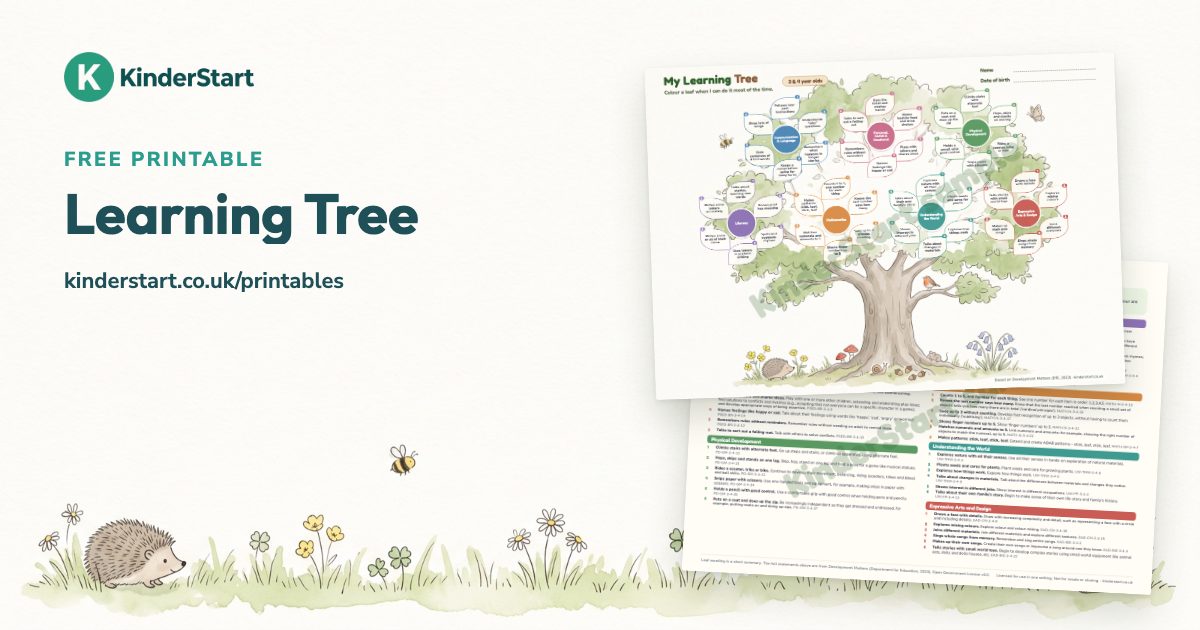
Learning Tree (3 to 4)
FreeTracker · 3 to 4
England, Scotland, Wales
A painted Learning Tree for 3 and 4 year olds in their pre-school years: talking, playing together, counting and mark-making.
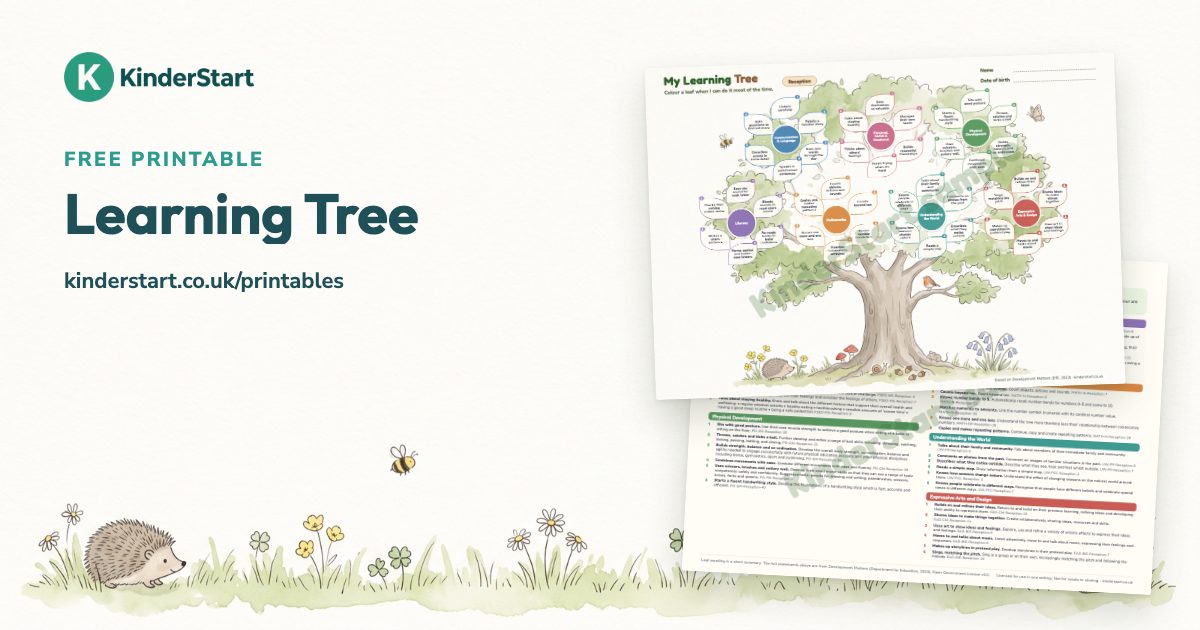
Learning Tree (Reception)
FreeTracker · Reception
England, Scotland, Wales
A painted Learning Tree for the year before school. Its statements lead to the Early Learning Goals, or to Early Level at 4 to 5 in Scotland.