Christmas Activities for Childminders by Age
KinderStart Team
2026-11-23 • 8 min read
Key Takeaways
 Key Takeaways
December in a childminding setting is busy, loud and lovely. You have mixed ages, tired children, parents rushing in, and a house full of shiny things that small hands want to grab. The best Christmas activities are simple ones that use what you already have and give you something real to observe.
This guide gives you activity ideas for babies, toddlers and pre-schoolers. Each one shows how it links to your curriculum, whether you work in England, Scotland or Wales. Then we cover safety, families who don't celebrate Christmas, and how to capture the learning without drowning in paperwork.
How the links work in each nation
You'll see three short lines under each activity. Use the one for your nation.
- England: the seven areas of learning in the EYFS statutory framework for childminders. Your inspectorate is Ofsted.
- Scotland: Realising the Ambition: Being Me, the national practice guidance for babies and young children, plus the SHANARRI wellbeing indicators (Safe, Healthy, Achieving, Nurtured, Active, Respected, Responsible, Included). For most children the early level of Curriculum for Excellence runs from age three to the end of Primary 1, so we name a curriculum area for pre-schoolers. Your inspectorate is the Care Inspectorate.
- Wales: the five developmental pathways (belonging, communication, exploration, physical development and well-being) used in the curriculum for funded non-maintained nursery settings, and the six Areas of Learning and Experience of Curriculum for Wales. Your inspectorate is Care Inspectorate Wales (CIW).
These are starting points, not tick boxes. What a child actually does tells you which area fits best.
Christmas activities for babies
Babies don't need Christmas. They need warmth, faces, sounds and things to hold. Keep it calm and sensory.
1. Crinkle and jingle basket
Fill a low basket with safe, big things that look and sound festive: a clean foil tray, a sealed sensory bottle with red and green water, a soft knitted stocking, a large wooden spoon. Sit close and name what they touch.
- England: Physical Development; Communication and Language
- Scotland: Realising the Ambition (when I am a baby); SHANARRI: Nurtured, Safe
- Wales: Pathways: exploration, communication
2. Lights in the dark
Dim the room and shine a torch through a colander or a box with star holes poked in it. Move the light slowly. Watch their eyes track it and listen for sounds of excitement.
- England: Understanding the World; Communication and Language
- Scotland: Realising the Ambition (when I am a baby); SHANARRI: Nurtured
- Wales: Pathways: exploration, well-being
3. Christmas songs with actions
Sing slow, repeated songs with simple actions: jingling hands, rocking, peekaboo with a scarf. Babies love the same song again and again. That is the point.
- England: Communication and Language; Personal, Social and Emotional Development
- Scotland: Realising the Ambition (when I am a baby); SHANARRI: Nurtured, Included
- Wales: Pathways: communication, belonging
Christmas activities for toddlers
Toddlers want to move, carry, fill, empty and say "again". Plan for mess, short attention and lots of repeating.
4. Wrapping and unwrapping
Wrap a teddy or a favourite toy in paper. Let them tear it open, then help them wrap it again. Use plain paper and masking tape you control. Talk about "inside", "under" and "again".
- England: Physical Development; Communication and Language
- Scotland: Realising the Ambition (when I am a toddler); SHANARRI: Achieving, Active
- Wales: Pathways: physical development, communication
5. Box sleigh push
Put a teddy in a big cardboard box and let them push it round the room. Add a second teddy and talk about heavy and light. Mixed ages can take turns as the "driver".
- England: Physical Development; Mathematics
- Scotland: Realising the Ambition (when I am a toddler); SHANARRI: Active
- Wales: Pathways: physical development, exploration
6. Paint and print stars
Dip a sponge star or a cut potato in paint and print on big paper. Toddlers often prefer to smear and pat, and that's fine. Use washable, non-toxic paint and keep hands away from mouths.
- England: Expressive Arts and Design; Physical Development
- Scotland: Realising the Ambition (when I am a toddler); SHANARRI: Achieving
- Wales: Pathways: exploration, physical development
7. Jingle march
Give everyone a pan and a wooden spoon, or a sealed shaker, and march round the room. Stop when the music stops. It burns off energy on a dark afternoon and practises listening.
- England: Expressive Arts and Design; Physical Development
- Scotland: Realising the Ambition (when I am a toddler); SHANARRI: Active, Included
- Wales: Pathways: physical development, communication
Christmas activities for pre-schoolers
Three and four year olds can plan, talk about their ideas and help younger children. Give them real jobs and real choices.
8. Paper chains that count
Cut paper strips together and make a chain, one link a day until the holidays or just as long as the hallway. Count the links, sort by colour and make patterns.
- England: Mathematics; Physical Development
- Scotland: Curriculum for Excellence early level: Numeracy and mathematics; SHANARRI: Achieving
- Wales: Mathematics and Numeracy; pathway: exploration
9. Kind cards
Make a card for a neighbour, a grandparent or someone they love. Let them make marks or "write" their own message, and scribe what they tell you. Post them on a walk.
- England: Literacy; Personal, Social and Emotional Development
- Scotland: Curriculum for Excellence early level: Literacy and English; SHANARRI: Respected, Included
- Wales: Languages, Literacy and Communication; pathway: belonging
10. Frosty walk
Wrap up and go out. Look for frost, ice on puddles, red berries, birds and the dark coming early. Back inside, put out seed or water for the birds and watch from the window. Hold hands near roads and walk slowly on icy paths.
- England: Understanding the World; Physical Development
- Scotland: Curriculum for Excellence early level: Sciences; SHANARRI: Healthy, Active
- Wales: Science and Technology; pathway: exploration
11. Ice rescue
Freeze small world toys in a tub of water overnight. Give children warm water, spoons and pipettes to free them. Talk about melting, warm and cold, and how long it takes. Stay within reach whenever there's water.
- England: Understanding the World; Communication and Language
- Scotland: Curriculum for Excellence early level: Sciences; SHANARRI: Achieving
- Wales: Science and Technology; pathway: exploration
12. Small world Christmas story
Use blocks, figures and a blanket to build a scene children choose: a snowy village, Santa's workshop, a winter forest. Join in, then step back and listen to the story they tell.
- England: Expressive Arts and Design; Communication and Language
- Scotland: Curriculum for Excellence early level: Expressive arts; SHANARRI: Included
- Wales: Expressive Arts; pathway: communication
Tip
 Tip
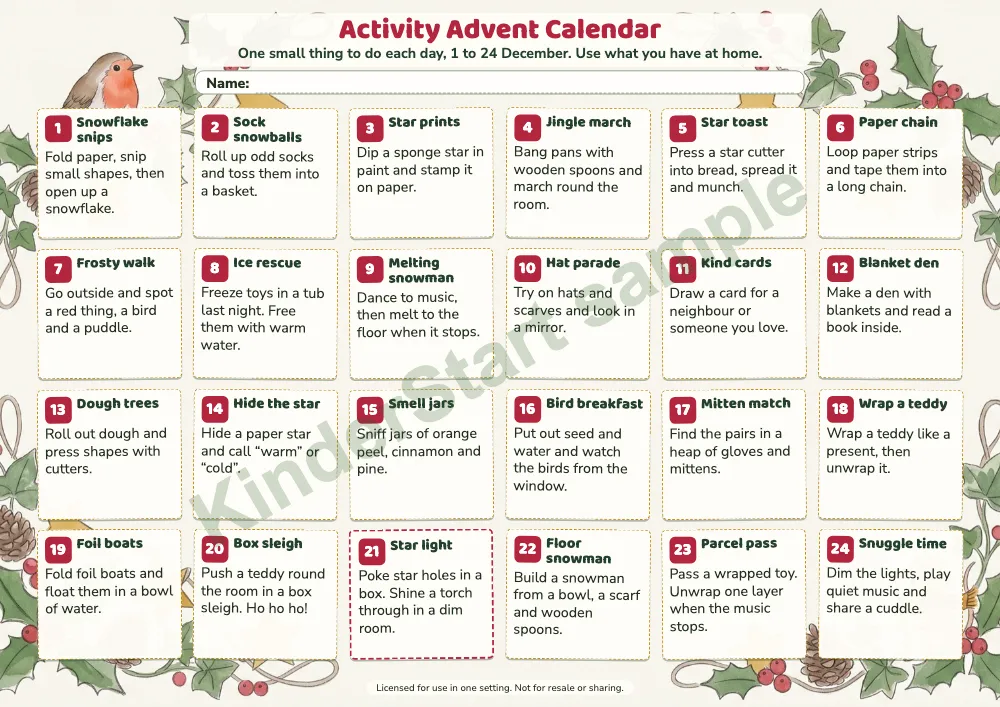
Want one small thing a day? Our free Activity Advent Calendar has 24 numbered squares for 1 to 24 December. Each uses household items, with an under-3 swap and supervision and allergen notes. There are versions for England, Scotland and Wales.
Christmas safety for under-5s
Decorations, novelty lights and visitors make December a riskier month at home. These points come from the Royal Society for the Prevention of Accidents (RoSPA), the Child Accident Prevention Trust (CAPT) and the NHS.
Decorations are not toys. RoSPA says decorations don't meet the same safety standards as toys and should not be given to children to play with. Look for labels such as "this is a decoration, not a toy" or "keep out of reach of children". Children under 36 months are most at risk, mostly from parts that can be pulled off and put in the mouth. (RoSPA: Christmas novelties)
Button batteries. Singing Santas, flashing wands and battery-powered tea lights can hold button batteries that children can get to easily. CAPT warns that a swallowed battery can kill a child, and that "flat" batteries can still be dangerous. Toys must keep batteries in a secure compartment, but novelties may not. Check each item and remove any with easy-to-open battery covers. (CAPT: button battery risks at Christmas)
If you think a child has swallowed a button battery, CAPT says go straight to A&E or dial 999. Take the packaging or product with you. Don't let them eat or drink, don't make them sick, and don't wait for symptoms. (CAPT: in an emergency)
Fairy lights and candles. CAPT's Christmas checks include frayed or loose cords on fairy lights, overloaded sockets and extensions, and candles near the tree. (CAPT: 6 Christmas safety tips) RoSPA says never leave a burning candle unattended and don't let children be near burning candles. (RoSPA: fires) In a childminding setting, the simplest rule is no real candles during the day at all.
Choking. Keep small decorations, chocolate coins and toy parts high up, especially on days when visitors drop bags and coats. Refresh your first aid with the NHS guide on how to stop a child from choking.
Update your risk assessment when the tree and decorations go up, and again when they come down.
Not every family celebrates Christmas
Some families in your setting will not celebrate Christmas. Others celebrate it differently, or celebrate other winter festivals as well. Ask families what matters to them before you plan, not after.
- Lean on winter themes that don't need Christmas at all: lights in the dark, ice, frost, birds, kindness, giving.
- Make cards "for someone you love", not only Christmas cards.
- Let a family share how they celebrate, if they want to, with a story, a song or a photo.
- Never make a child take part in a religious activity their family has said no to. Have the same activity without the festive theme ready.
Our Advent Calendar includes one optional nativity or festival-of-light square with a non-religious alternative, so you can pick what fits your families.
Observing Christmas activities without the paperwork
You don't need to photograph every paper chain. A few good observations tell you far more than a full folder.
- Watch for the new thing. The first time a toddler says "again", a baby tracks a light across the room, or a four year old counts ten links on their own. That's the moment worth writing down.
- Write what they did and said. "Pushed the box sleigh with both hands, said 'heavy'" is more useful than "enjoyed the activity".
- Note the next step. One line on what you'll offer next keeps your planning moving into January.
- Share it with parents. A short note at home time, or a photo with one line of context, helps families carry the learning on over the holidays.
If you use KinderStart, you can record an observation on your phone in a few taps, tag it to EYFS, Curriculum for Excellence or Curriculum for Wales, and share it with parents straight away. It's built for childminders in England, Scotland and Wales.
More seasonal activities
Planning ahead for the new year? These follow the same layout, by age and by nation:
- Burns Night activities (25 January)
- Chinese New Year activities (Lunar New Year)
- Pancake Day activities (Shrove Tuesday)
- World Book Day activities (March)
Key takeaways
- Keep Christmas activities simple, sensory and repeatable, using what you already have.
- Link each activity to your own nation's framework: EYFS in England, Realising the Ambition, SHANARRI and Curriculum for Excellence in Scotland, and the developmental pathways and Curriculum for Wales in Wales.
- Treat decorations, button batteries, fairy lights and candles as real risks, and update your risk assessment.
- Plan winter activities every family can join, and ask families how they celebrate.
- Observe the new and the surprising, not everything.
Try Our Free Tools
 Try Our Free Tools
Continue Reading in this Series
Printables for your setting
All printables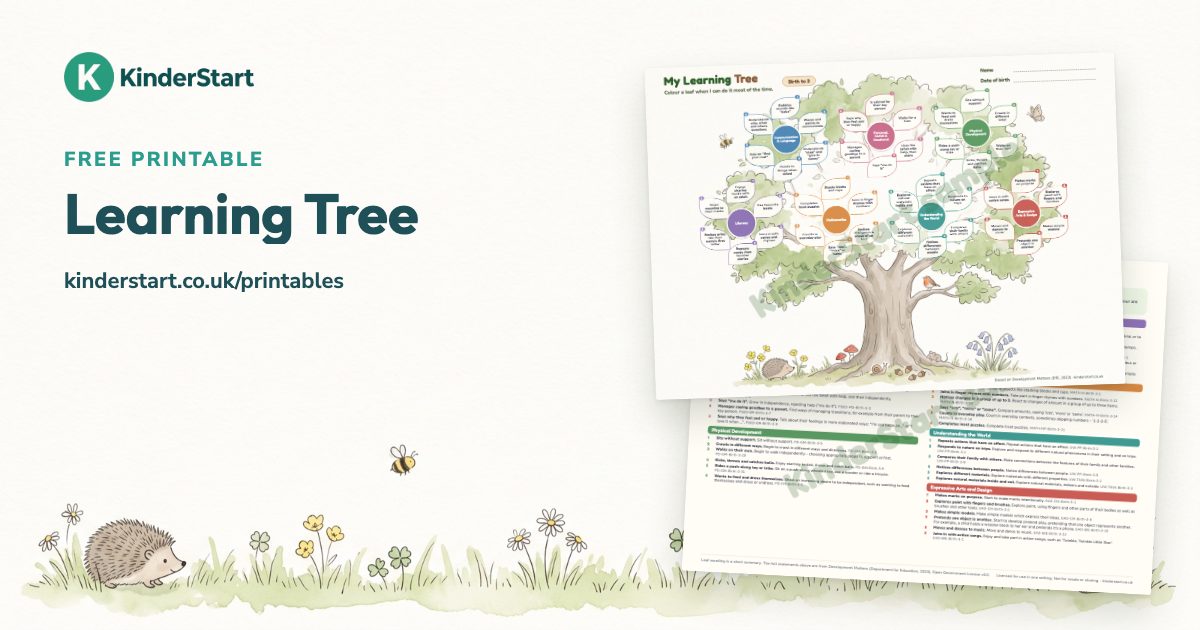
Learning Tree (Birth to 3)
FreeTracker · Birth to 3
England, Scotland, Wales
A painted Learning Tree for babies and toddlers. It covers first words, moving and exploring, and secure relationships. Colour a leaf as each one comes.
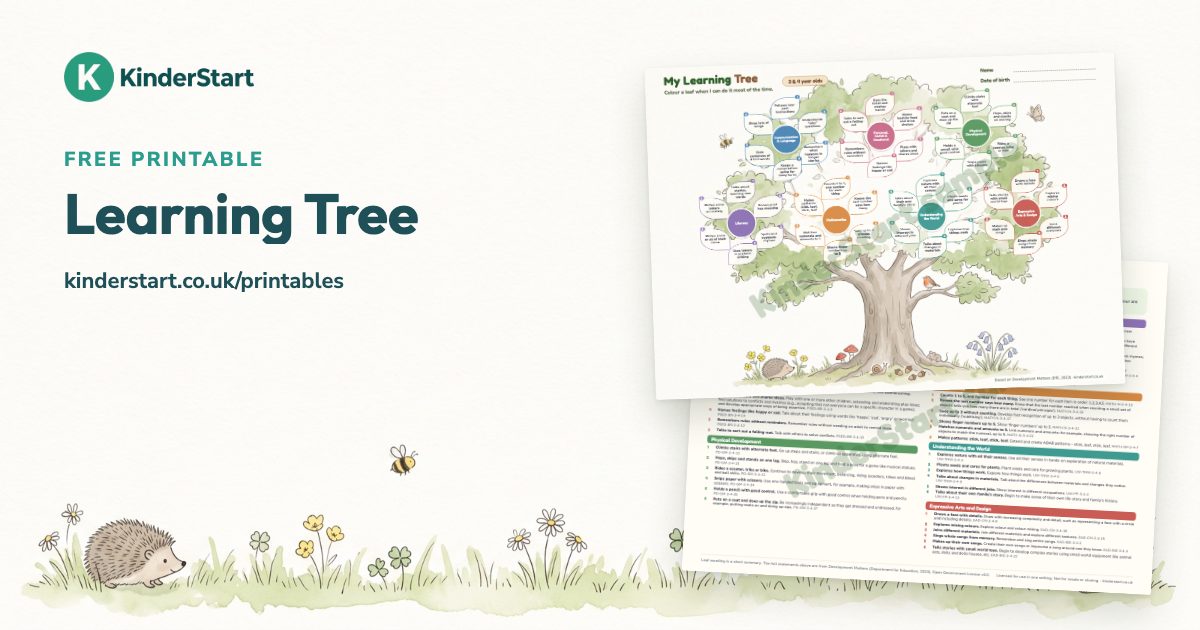
Learning Tree (3 to 4)
FreeTracker · 3 to 4
England, Scotland, Wales
A painted Learning Tree for 3 and 4 year olds in their pre-school years: talking, playing together, counting and mark-making.
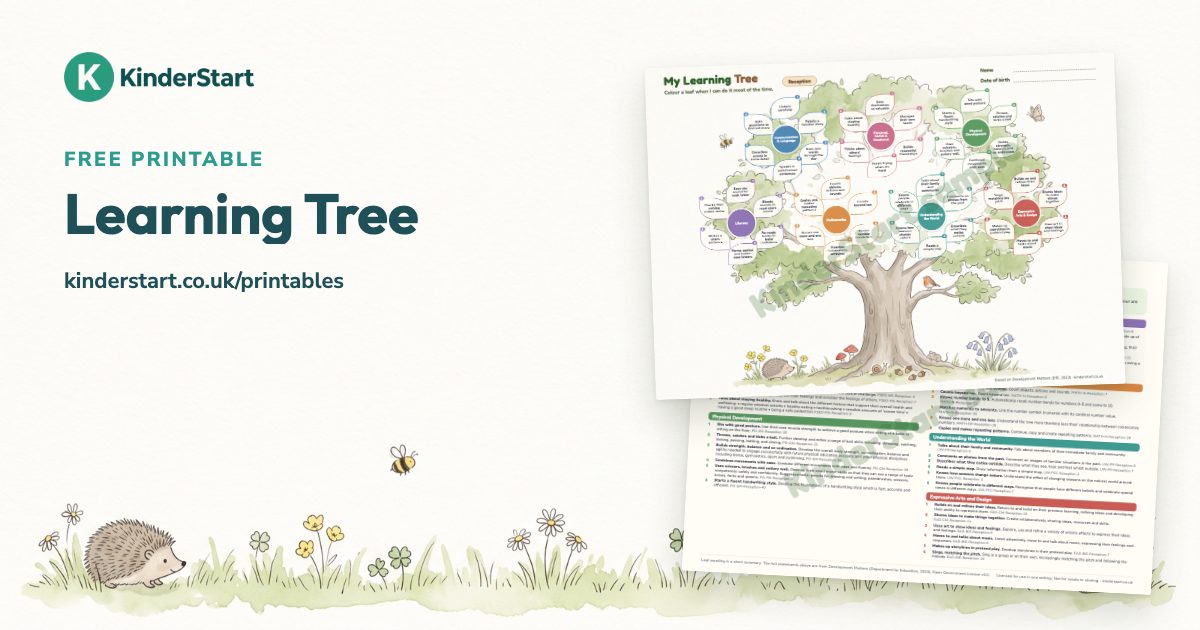
Learning Tree (Reception)
FreeTracker · Reception
England, Scotland, Wales
A painted Learning Tree for the year before school. Its statements lead to the Early Learning Goals, or to Early Level at 4 to 5 in Scotland.