Pancake Day Activities for Early Years
KinderStart Team
2026-11-23 • 7 min read
Key Takeaways
 Key Takeaways
Pancake Day is Shrove Tuesday, the day before Lent begins. Easter Sunday 2027 is on 28 March (Royal Museums Greenwich: when is Easter?). So Shrove Tuesday 2027 falls on Tuesday 9 February. In Britain it's called Pancake Day because pancakes use up the rich foods before Lent (RE Online: Shrove Tuesday).
For a childminder, pancakes are a gift: counting, measuring, mixing, flipping and tasting, all in one morning. This guide gives you Pancake Day activities for babies, toddlers and pre-schoolers, each linked to your curriculum. Then come the safety points that matter most: hot pans, allergens and toppings.
How the links work in each nation
You'll see three short lines under each activity. Use the one for your nation.
- England: the seven areas of learning in the EYFS statutory framework for childminders. Your inspectorate is Ofsted.
- Scotland: Realising the Ambition: Being Me and the SHANARRI wellbeing indicators. For most children, the early level of Curriculum for Excellence runs from age three to the end of Primary 1. So we name a curriculum area for pre-schoolers. Your inspectorate is the Care Inspectorate.
- Wales: the five developmental pathways in the curriculum for funded non-maintained nursery settings. These are belonging, communication, exploration, physical development and well-being. You'll also see the six Areas of Learning and Experience of Curriculum for Wales. Your inspectorate is Care Inspectorate Wales (CIW).
These are starting points, not tick boxes. What a child actually does tells you which area fits best.
Pancake Day activities for babies
Babies can join in with sound, touch and a taste, if they're already on solid food.
1. Pan and spoon band
Give them a cold frying pan or saucepan and a wooden spoon. Bang, tap and stir together. Copy their rhythm back to them.
- England: Expressive Arts and Design; Physical Development
- Scotland: Realising the Ambition (when I am a baby); SHANARRI: Active, Nurtured
- Wales: Pathways: communication, physical development
2. Pancake peekaboo
Cut a big pancake shape from felt or a tea towel. Hide your face, a teddy or their foot under it and say "Where's it gone?" then "There it is!"
- England: Personal, Social and Emotional Development; Communication and Language
- Scotland: Realising the Ambition (when I am a baby); SHANARRI: Nurtured
- Wales: Pathways: well-being, communication
3. First pancake taste
For babies already eating these foods, offer soft strips of plain pancake, cooled, with mashed banana or soft fruit on top. Let them hold and squash it.
- England: Physical Development; Understanding the World
- Scotland: Realising the Ambition (when I am a baby); SHANARRI: Healthy
- Wales: Pathways: exploration, physical development
Pancake Day activities for toddlers
Toddlers love to pour, stir and toss. Keep them well away from the hob and give them the parts of the job that are safe.
4. Mix the batter
Sit at the table, away from the cooker. Let them crack an egg into a bowl with your help, pour in the milk you've measured and stir. Talk about runny, lumpy, smooth and more.
- England: Physical Development; Communication and Language
- Scotland: Realising the Ambition (when I am a toddler); SHANARRI: Achieving, Healthy
- Wales: Pathways: exploration, physical development
5. Toss a pretend pancake
Give each child a toy pan or a paper plate and a felt or paper pancake. Toss it up and try to catch it. Count "1, 2, 3, flip!" together.
- England: Physical Development; Mathematics
- Scotland: Realising the Ambition (when I am a toddler); SHANARRI: Active
- Wales: Pathways: physical development, exploration
6. Topping choices
Put out two or three healthy toppings, such as sliced banana, berries and plain yoghurt. Let each child choose and spread their own. Talk about what they picked and why.
- England: Personal, Social and Emotional Development; Physical Development
- Scotland: Realising the Ambition (when I am a toddler); SHANARRI: Healthy, Respected
- Wales: Pathways: well-being, belonging
Pancake Day activities for pre-schoolers
Three and four year olds can follow steps, count, measure and race.
7. Follow a picture recipe
Draw a simple recipe with pictures: 1 cup, 2 eggs, a jug of milk. Let them count the eggs, fill the cup and tick off each step. Talk about first, next and last.
- England: Mathematics; Literacy
- Scotland: Curriculum for Excellence early level: Numeracy and mathematics; SHANARRI: Achieving
- Wales: Mathematics and Numeracy; pathway: exploration
8. Pancake race
Mark a start and finish in the garden or park. Each child runs, walks or hops with a paper pancake or beanbag in a toy pan. If it falls, they stop and pop it back.
- England: Physical Development; Personal, Social and Emotional Development
- Scotland: Curriculum for Excellence early level: Health and wellbeing; SHANARRI: Active, Included
- Wales: Health and Well-being; pathway: physical development
9. Pancake stack counting
Cut card circles as pancakes and number them. Build stacks: can they make a stack of 5? Which stack is tallest? Add one more, take one away.
- England: Mathematics
- Scotland: Curriculum for Excellence early level: Numeracy and mathematics; SHANARRI: Achieving
- Wales: Mathematics and Numeracy; pathway: exploration
10. Watch the change
Look at the batter in the bowl. Then let them watch from a safe distance as you cook one. They sit at the table, not by the hob. What changed? Runny to solid, white to golden.
- England: Understanding the World; Communication and Language
- Scotland: Curriculum for Excellence early level: Sciences; SHANARRI: Achieving, Safe
- Wales: Science and Technology; pathway: exploration
Pancake Day safety
Hot pans. RoSPA says the kitchen is a dangerous place for small children. Keep them out while you cook if you can. Use the back burners and turn pan handles in so they can't grab them. Never leave hot drinks within reach. (RoSPA: burns and scalds) Cook while children sit at the table, or while another adult is with them. Let pancakes cool before you hand them out.
If a child is burned. The NHS says cool the burn under cool running water for 20 minutes. Take off clothing or jewellery near it, unless it's stuck. Cover it loosely with cling film. For a child under 5, call 111 for advice, or 999 for a serious burn. (NHS: burns and scalds)
Allergens. Pancake batter usually contains eggs, milk and wheat flour (a cereal containing gluten). All three are among the 14 allergens that food law names. Toppings such as nut spreads add more. Check every child's allergy and dietary records before you start. Plan a version everyone can eat.
Toppings for under-5s. The NHS says don't give honey to babies under 1. For children aged 4 or younger, avoid food and drink with added sugar or sweeteners, including honey and syrup. Fruit and plain yoghurt are better toppings. Don't give whole nuts to children under 5. Spread nut butter thinly on food, and don't give it on its own. (NHS: foods to avoid giving babies and young children)
Note
We don't have a Pancake Day printable yet. Everything above uses things you already have in the kitchen.
Observing without the paperwork
You don't need a photo of every child doing every activity. Watch for the new thing: a first word, a first go at something, a child who usually hangs back joining in. Write what they did and said, not "enjoyed the activity", and note one next step.
If you use KinderStart, you can record an observation on your phone in a few taps. Tag it to EYFS, Curriculum for Excellence or Curriculum for Wales, and share it with parents straight away.
More seasonal activities
- Burns Night activities (25 January)
- Chinese New Year activities (Lunar New Year)
- World Book Day activities (March)
- Christmas activities (December)
Key takeaways
- Pancake Day 2027 is on Tuesday 9 February.
- Mixing, counting, tossing and racing give you activities for every age.
- Keep children away from the hob, turn pan handles in and cool pancakes before serving.
- Check for eggs, milk and wheat, and choose fruit over sugar, syrup and honey for under-5s.
Try Our Free Tools
 Try Our Free Tools
Continue Reading in this Series
Printables for your setting
All printables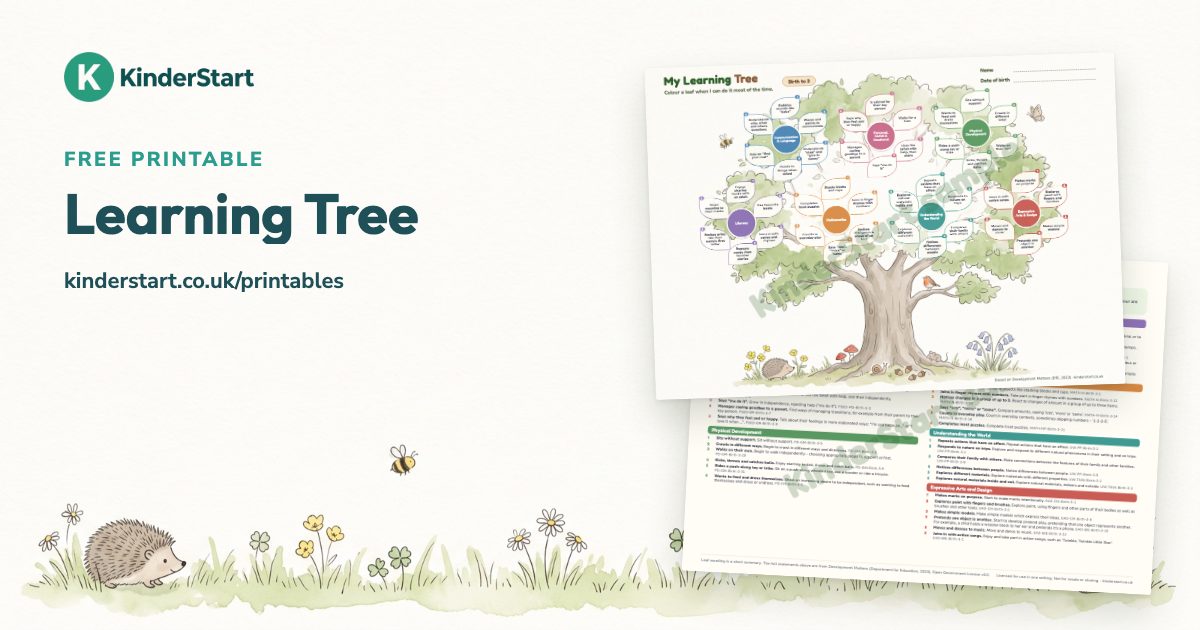
Learning Tree (Birth to 3)
FreeTracker · Birth to 3
England, Scotland, Wales
A painted Learning Tree for babies and toddlers. It covers first words, moving and exploring, and secure relationships. Colour a leaf as each one comes.
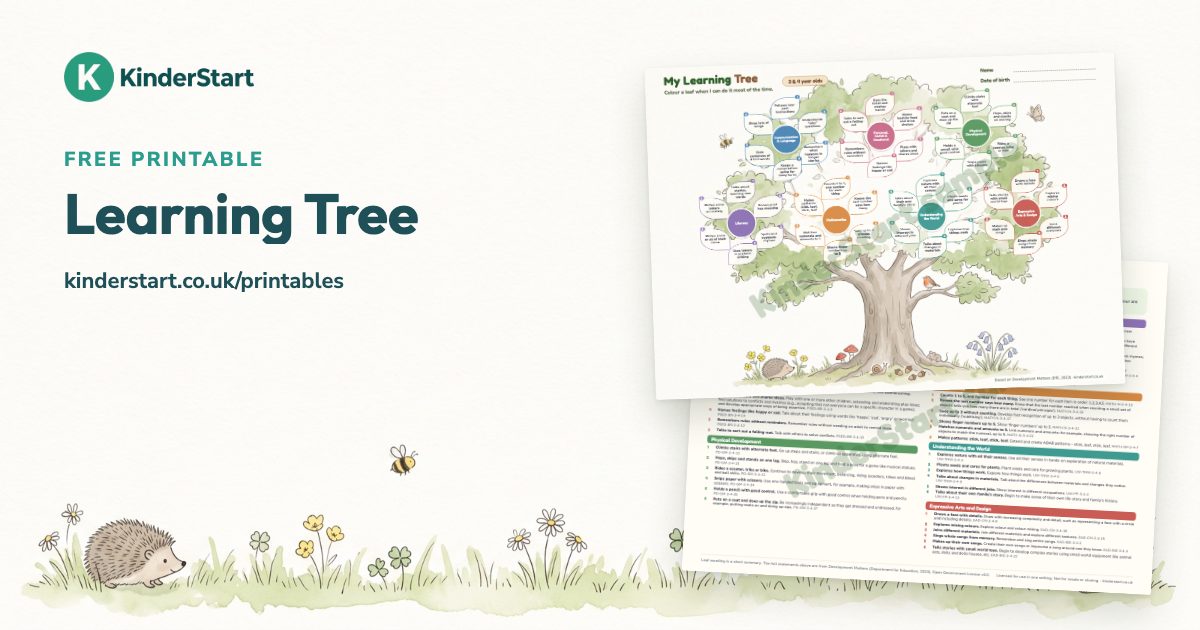
Learning Tree (3 to 4)
FreeTracker · 3 to 4
England, Scotland, Wales
A painted Learning Tree for 3 and 4 year olds in their pre-school years: talking, playing together, counting and mark-making.
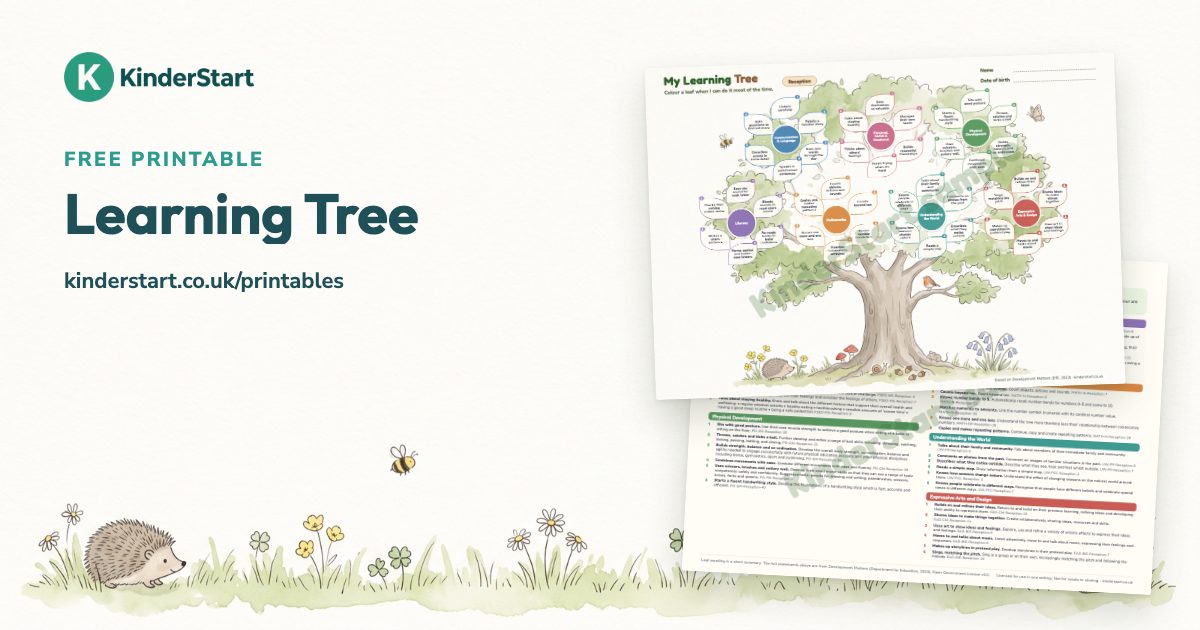
Learning Tree (Reception)
FreeTracker · Reception
England, Scotland, Wales
A painted Learning Tree for the year before school. Its statements lead to the Early Learning Goals, or to Early Level at 4 to 5 in Scotland.