How Much Does a Childminder Cost? (2026)
Daniel Broadhurst (Founder)
Nov 23, 2026 • 6 min read
Key Takeaways
 Key Takeaways
A childminder in England costs about £6.21 an hour per child on average in 2026. In Scotland it is about £5.83 and in Wales about £5.48. These prices are for a child under two who is not using any funded hours, so many families pay less.
Below are the prices by region, what to ask about before you sign, and the government help that can cut your bill.
How much does a childminder cost per hour?
The Coram Childcare Survey 2026 gives the average weekly price of 25 hours with a childminder for a child under two, before any funded hours (Tables 3 and 4). We divided each weekly price by 25 to get an hourly price.
| Area | 25 hours a week | About per hour |
|---|---|---|
| England average | £155.28 | £6.21 |
| London, Inner | £226.39 | £9.06 |
| London, Outer | £199.09 | £7.96 |
| South West | £174.87 | £6.99 |
| East of England | £156.01 | £6.24 |
| South East | £148.98 | £5.96 |
| West Midlands | £143.41 | £5.74 |
| East Midlands | £139.20 | £5.57 |
| North West | £137.42 | £5.50 |
| Yorkshire and the Humber | £125.47 | £5.02 |
| North East | £122.65 | £4.91 |
| Scotland | £145.65 | £5.83 |
| Wales | £136.96 | £5.48 |
Prices are per child, so two children usually cost about twice as much. Your own childminder sets their own price, so use these as a guide.
How much does a childminder cost per day?
At the England average of £6.21 an hour, a 10-hour day costs about £62 per child. That runs from about £49 in the North East to about £91 in Inner London. This is our own sum from the Coram hourly prices above. Some childminders charge a set price for a day or a session instead, so ask.
What should the price include?
Every childminder sets out what their price covers in their contract. Ask whether these are in the hourly price or charged on top:
- meals, snacks and drinks
- nappies, wipes and sun cream
- trips and activities
- a deposit or retainer to hold the place
- the childminder's own holidays and bank holidays
- days your child is off sick
- late collection
If your child gets funded hours in England, the rules are clear. You pay nothing for the funded hours themselves. A childminder can ask you to pay for extras like meals or nappies, but you must be able to opt out, for example by sending a packed lunch, and the invoice should list the extras separately (DfE early education and childcare guidance). Coram notes that any deposit for a funded place must be refundable.
How to bring the cost down
Funded hours in England
| Who | Age | Funded hours |
|---|---|---|
| Working parents | 9 months to school age | Up to 30 hours a week |
| Families getting some benefits or support | 2-year-olds | 15 hours a week |
| Every family | 3- and 4-year-olds | 15 hours a week |
These hours run for 38 weeks a year. Check what you can get on GOV.UK: free childcare for working parents, 2-year-olds and 3 to 4-year-olds. Working parents get an 11-digit code to give to the childminder, and must reconfirm every 3 months.
Ask whether your childminder offers funded hours. They may also "stretch" them, which means fewer funded hours each week over more than 38 weeks (Best Start in Life). That gives you a steadier bill all year.
Coram found that a family eligible for the working parent hours who uses 25 hours a week pays nothing for those hours during term time, whether they use a nursery or a childminder.
Tax-Free Childcare
With Tax-Free Childcare, the government adds £2 for every £8 you pay in. That is up to £2,000 a year per child, or £4,000 if your child is disabled, for children aged 11 or under (16 or under if disabled). Your childminder must be signed up to the scheme.
You can use Tax-Free Childcare alongside your funded hours, to pay for extra hours. You can't get Tax-Free Childcare and Universal Credit childcare costs at the same time (GOV.UK).
Scotland and Wales
There are no funded hours for under-twos in Scotland or Wales (Coram 2026). Older children can get help:
- Scotland: children aged 3 to 5, and some 2-year-olds, get 1,140 hours a year of funded early learning and childcare, with a childminder if they are a funded provider (mygov.scot).
- Wales: the Childcare Offer for Wales helps working parents, and parents in education or training, of 3- and 4-year-olds for up to 48 weeks a year. Flying Start gives eligible 2-year-olds 2 and a half hours a day, 5 days a week, for 39 weeks a year (Welsh Government).
Questions to ask a childminder about cost
- What is your hourly rate, and is it per child?
- Do you charge by the hour, the session or the day?
- What is included, and what costs extra?
- Do you offer funded hours? Do you stretch them over the year?
- Are you signed up for Tax-Free Childcare?
- Do you charge a deposit or retainer? When is it refunded?
- Do I pay for your holidays, bank holidays or days my child is off sick?
- How much notice do we each give, and is it in the contract?
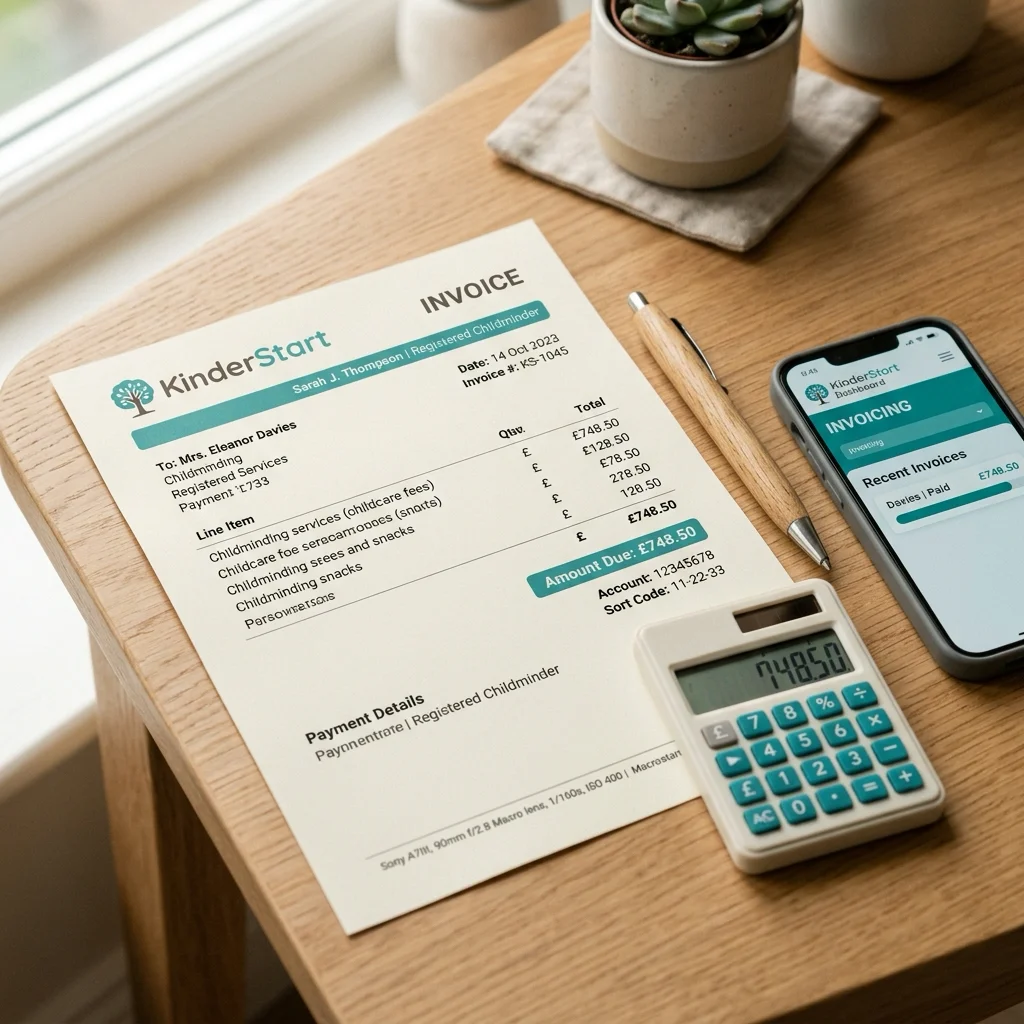
- How do you send invoices, and how can I pay?
You can also read a childminder's latest inspection report: Ofsted in England, the Care Inspectorate in Scotland and Care Inspectorate Wales.
If your childminder uses KinderStart, you can see your invoices, sign the contract and follow your child's day in the parent app.
Are you a childminder working out your prices? See how much to charge as a childminder and our funded hours guide for childminders.
 Try Our Free Tools